


Insight Sharing
Google I/O 2026: GEO Is Replacing Traditional SEO in AI Search

Why Google I/O 2026 Signals the End of Traditional SEO
For over two decades, the playbook for digital growth was simple: figure out what your customers type into a search box, sprinkle those exact keywords across your website, and fight for a spot on the first page of Google.
But the landscape has fundamentally shifted. The recent Google I/O 2026 keynotes officially marked the end of that era. Search is rapidly evolving from a mechanical keyword-matching index into an AI-driven, multi-modal agent ecosystem.
If your digital strategy is still anchored in 2024 legacy SEO tactics, your business is on the verge of becoming invisible to the next generation of consumers. To survive, brands must transition immediately from traditional SEO to GEO (Generative Engine Optimization). Here is exactly what this shift means for your business, your traffic, and your bottom line.
1. The End of Traditional Search Behavior: Beyond the 10 Blue Links
For years, search worked in a predictable way. Users typed a few keywords into Google, opened multiple websites, compared information manually, and decided which business to trust.
Today, that behavior is radically fracturing. Platforms like ChatGPT, Perplexity, Gemini, and Google's AI Overviews have trained users to expect direct, conversational answers instead of scrolling through pages of search results.
Instead of searching a generic phrase like:
“best CRM consultant Hong Kong”
Users now ask highly specific questions:
“Which AI consultancy is best suited for a mid-sized financial company migrating legacy CRM infrastructure?”
The difference is massive. Users are no longer searching for links. They are asking AI systems for decisions, recommendations, and summarized outcomes. In this new model, visibility works very differently. If your website cannot answer the 'why' and 'how' behind these complex queries, you become instantly obsolete.
2. Why Keywords Alone Are No Longer Enough: The Coming Traffic Collapse
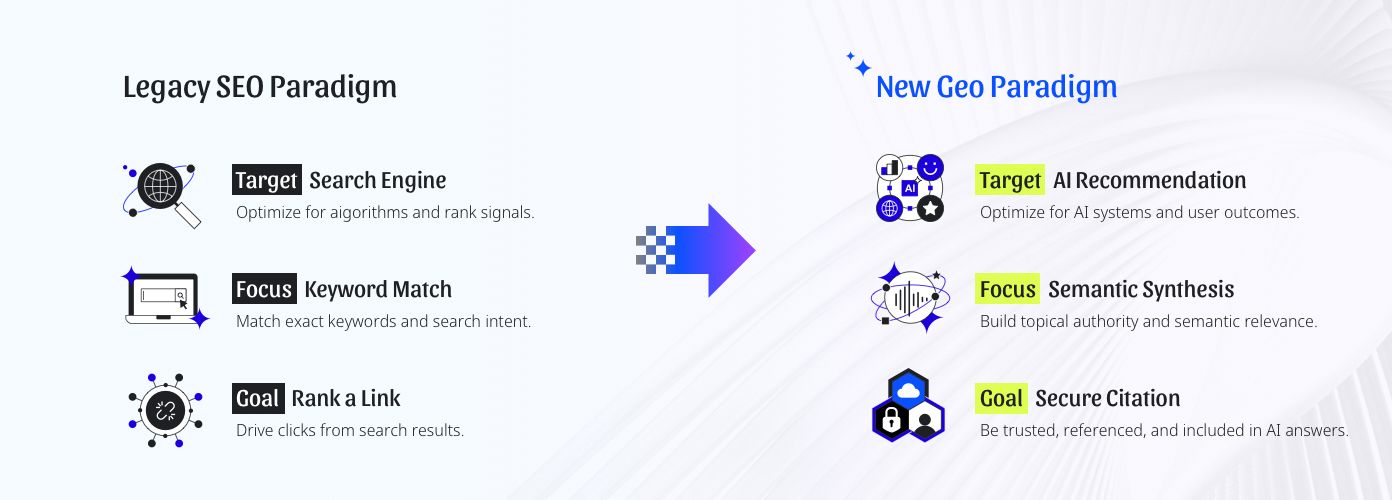
Traditional SEO was built around keywords. AI search is built around understanding. Modern AI engines no longer rely on simple keyword matching. Instead, they evaluate semantic relevance, trust signals, entities, citations, and machine-readable structures to determine which businesses deserve real estate inside AI-generated answers.
And this is where the real disruption begins: A company can still rank on Google — and simultaneously disappear from AI-generated visibility.
As AI answers become the primary discovery layer, users increasingly stop clicking traditional search results altogether. AI systems now summarize, recommend, and filter information before a human ever visits a website. The result for legacy websites is a devastating visibility gap:
- Fewer organic clicks as user intent is satisfied natively on the search platform.
- Lower brand consideration as background agents screen out non-optimized vendors.
- Reduced lead generation and declining relevance in AI-driven search ecosystems.
The next generation of digital competition will not be about ranking higher on a page of blue links. It will be about whether AI systems choose to understand, trust, and recommend your business at all.
Figure 1: Comparison between traditional SEO and GEO showing the shift from ranking pages to earning AI trust and visibility
3. What Is GEO (Generative Engine Optimization)?
To understand how to capture traffic today, businesses must understand the evolution of search optimization frameworks:
| Framework | Core Objective | Primary Target | Optimization Focus |
| SEO (Search Engine Optimization) | Rank on legacy SERPs | Algorithms & Crawlers | Keywords, Backlinks, H1 tags, Page speed |
| AEO (Answer Engine Optimization) | Win single direct answers | Voice Assistants & Chatbots | Concise FAQ schemas, bullet points, Q&A formats |
| GEO (Generative Engine Optimization) | Inclusion in AI-synthesized responses | Conversational Engines & AI Agents | Semantic depth, Entity mapping, Machine-readable trust signals |
Generative Engine Optimization (GEO) is the strategic practice of optimizing your brand's digital presence so that AI engines accurately understand, trust, and prominently feature your business inside their dynamically generated answers. While SEO optimized for a position, GEO optimizes for AI Visibility and inclusion.
For a deeper breakdown of how GEO and AEO are reshaping the future of search, explore our previous analysis here:
Why GEO and AEO Are Overtaking Traditional SEO
4. What Google I/O 2026 Revealed: The Era of the Agentic Shift
Google I/O 2026 was not a mere showcase of tech upgrades; it was a demonstration of how AI will actively run execution workflows across the web.
Google I/O 2026 Official Keynote>>
The business implications of these announcements are massive:
Gemini 3.5 Flash & The Agent Ecosystem
Google has deployed Gemini 3.5 Flash as its lightning-fast, highly cost-effective engine to power multi-agent workflows. In the near future, consumer AI tools (like Gemini Spark) will run continuously in the background, autonomously researching choices, sorting data, and shortlisting B2B vendors or consumer products for users before a human ever initiates a manual search.
Ask YouTube & Universal Search
With models like Gemini Omni processing native text, audio, and video flawlessly, search is now entirely multi-modal. Features like Ask YouTube allow users to bypass video timelines entirely to extract direct contextual information. If your product videos or technical documentations aren't optimized for multi-modal AI parsing, they remain completely locked away from conversational search engines.
5. Why Businesses Need AI-Ready Websites: The Visibility Crisis
The most critical threat facing modern enterprises is a total loss of digital visibility. If your corporate website is not AI-readable, generative search engines will simply bypass your site, resulting in a devastating drop in organic traffic and lead generation.
To remain viable, your brand requires an AI-ready website optimized with advanced technical infrastructure:
- Structured Schema Markup: Giving AI engines explicit, unambiguous clues about the meaning of your page, your team, your products, and your verified corporate entities.
- Semantic HTML & FAQ Architecture: Building deep hierarchical content flows that match how an LLM parses data structures.
- Entity Optimization: Cementing your brand's footprint within global knowledge graphs to prove your industry authority.
- Machine-Readable Trust Signals: Ensuring your content contains clear authorship data, primary source citations, and transparent, credible metrics that AI algorithms require to verify your claims.
6. The Future: Designing Web Spaces for Both Humans and AI Agents
Moving forward, your website must serve two distinct, equally critical audiences: Human visitors and Autonomous AI Agents.
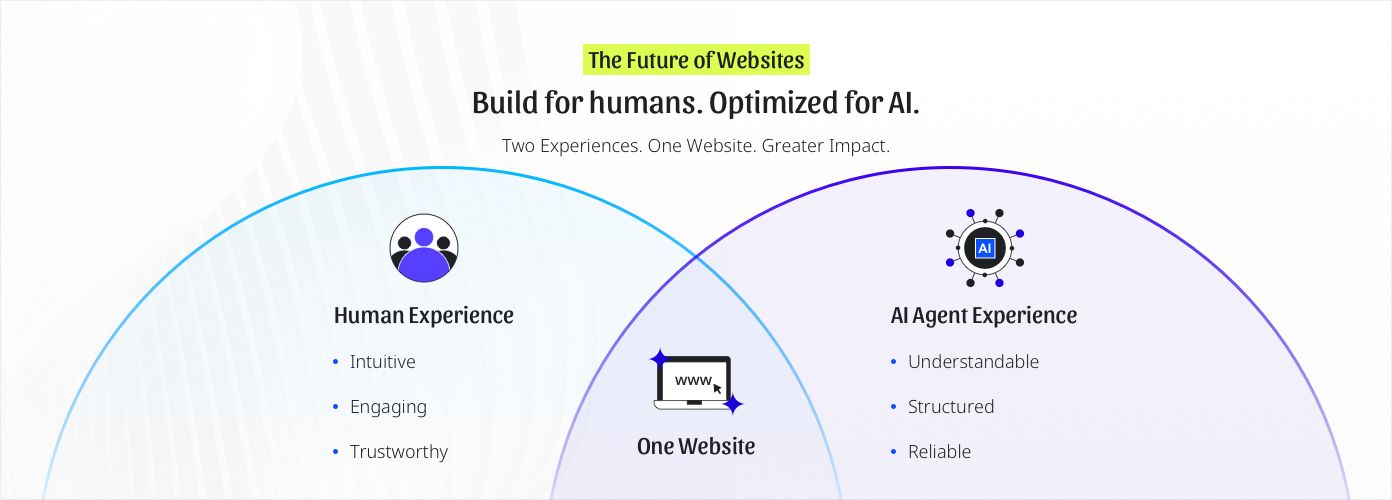
Figure 2: Modern website architecture designed for both human users and AI-readable structured content layers
Google’s developer keynote introduced WebMCP (Web Model Context Protocol)—a rising browser standard explicitly designed for agent-to-site interaction. Coupled with tools like Chrome DevTools for Agents, AI assistants now have the capacity to browse pages, test code, run internal site diagnostics, and autonomously complete checkouts or schedule bookings on behalf of human users.
Your future digital presence cannot just look pretty to a human eye. It must feature a highly structured execution layer that permits an AI agent to crawl, verify data integrity, and convert seamlessly.
7. How Hypthon Prepares Your Business for the GEO Revolution
At Hypthon, we do not treat GEO as a superficial content tactic or a simple adjustment to your metadata. We treat it as a critical infrastructure transition.
Through our specialized deployment suites, we help forward-thinking brands establish absolute dominance within generative search layers:
- AI-Readable Website Architectures: We overhaul your site's backend using advanced semantic HTML and optimized technical frameworks, ensuring that autonomous crawlers and web protocols like WebMCP can seamlessly parse your ecosystem.
- Entity-Driven Content Ecosystems: We move your content strategy away from dead keyword lists and rebuild it around verified data entities, firmly embedding your brand footprint inside global AI knowledge graphs.
- Machine-Verifiable Trust Layers: We implement explicit, cryptographic-level data architectures, rich schema networks, and authoritative citation structures that LLMs require to verify your corporate credibility.
- Structured Semantic Frameworks: We map your services, FAQs, and proprietary insights into deep hierarchical data flows, specifically tailored for conversational answer engines and multi-agent workflows.
- AI Citation Optimization Systems: We run continuous diagnostics against major models (Gemini, ChatGPT, Perplexity) to reverse-engineer how they cite sources, positioning your brand to secure the primary recommendation slots.
In the next generation of search, visibility will not belong to the loudest voice or the highest ad spend. It will belong exclusively to the businesses that AI systems can confidently understand, trust, and recommend.
The traffic shift has already begun. Don't let your business become a ghost in a legacy index.
👉 Is your digital infrastructure ready for the Agentic Era? Connect with the Hypthon engineering team today to secure your comprehensive GEO audit and guarantee your brand's future visibility.

Explore more